
Are Your Innovation Projects and Initiatives Effective?
How to Measure the Impact and ROI of Innovation
January 30, 2024
1:00 pm – 2:00 pm Central Time
Innovation is everywhere, in every type of organization, and in every part of the world. Leaders want innovation, politicians cheer innovation, consumers demand innovation, investors reward innovation, and media outlets promote innovation. The visibility and popularity of innovation translate into billions of dollars being pumped into all types of innovation efforts. This visibility brings out critics who expose glitches and concerns. Lack of success and high failure rates bring out even more critics. All of this creates the need to show more results in a timely manner.
Because the number one source of innovation is employees, executives and managers have an important role in making innovation work in organizations. By implementing all types of programs, from brainstorming to innovation labs, managers can show their contribution to innovation.
This webinar will describe how to see and show the value of innovation. Using the ROI Methodology® as a framework, you can collect data at five levels, plus intangibles. When conservative standards are used and presented in a compelling way, you can make a great argument for securing funds for innovation, even in a difficult or unstable economy.
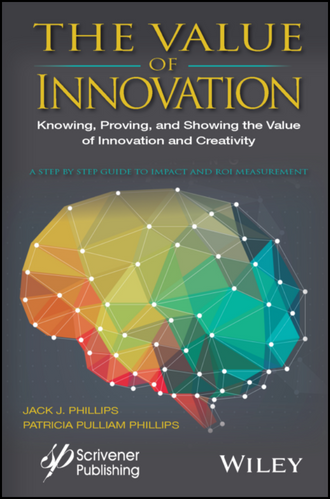
Webinar participants will receive a copy of the presentation, job aids, and a free copy of The Value of Innovation: Knowing, Proving, and Showing the Value of Innovation and Creativity (Wiley). This 350-page book will be a valuable reference for anyone involved in innovation.
After completing this session, participants should be able to:
- Identify the five levels of outcome data needed to showcase and deliver impact and ROI.
- Describe the possibilities for innovation programs.
- Identify the data needed by executives along with their expectations.
- Explain how to measure impact, ROI, and intangibles in a compelling way.
- Plan the next steps to ensure maximum business value.

Jack J. Phillips, Ph.D., chairman, ROI Institute, is a world-renowned accountability, measurement, and evaluation expert. Jack provides consulting services for Fortune 500 companies and major global organizations. The author or editor of more than 100 books, he conducts workshops and presents at conferences worldwide.
His expertise in measurement and evaluation is based on more than 27 years of corporate experience in the aerospace, textile, metals, construction materials, and banking industries. Jack has served as training and development manager at two Fortune 500 firms, senior human resource officer at two firms, president of a regional bank, and management professor at a major state university.
This background led Dr. Phillips to develop the ROI Methodology. This revolutionary process provides bottom-line figures and accountability for all types of learning, performance improvement, human resources, technology, and public policy programs.
Jack has worked with many organizations to help them ensure that their creativity and innovation programs deliver value. He’s also worked with startups to make sure that the proof of concept has been clearly developed, and he’s worked with R&D labs to ensure their efforts are efficient and effective.
Phillips has received several awards for his books and work. The Society for Human Resource Management (SHRM) presented him with an award for one of his books and honored an ROI study with its highest award for creativity. In November 2019, Jack and his wife and business partner, Patti Phillips, were named two of the top 50 coaches in the world by the Thinkers 50 organization. In addition, they were named finalists for the Marshall Goldsmith Distinguished Achievement Award for Coaching. In 2017, he received the Brand Personality Award from Asia Pacific Brands Foundation for his work as an international consultant, author, teacher, and speaker.
Jack holds undergraduate degrees in electrical engineering, physics, and mathematics; a master’s degree in Decision Sciences from Georgia State University; and a Ph.D. in Human Resource Management from the University of Alabama. He has served on the boards of several private businesses—including two NASDAQ companies—and several nonprofits and associations, including the American Society for Training and Development and the National Management Association.